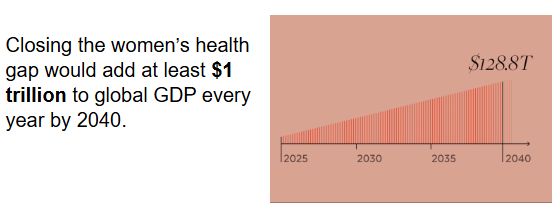
Closing the women’s health gap would add at least $1 trillion to global GDP every year by 2040, yet less than 1% of global health research funding is allocated to women’s health conditions beyond cancer. The result is widespread underdiagnosis, undertreatment, and avoidable long-term costs for individuals, employers, and healthcare systems.
Menopause illustrates the scale of this systemic failure. Every year, around 2 million women in the US enter menopause, with up to 90% experiencing symptoms that affect physical health, cognitive function, mental wellbeing, and long term disease risk. Despite this, only a minority receive adequate care. If women with moderate to severe symptoms were properly treated, the menopause care market alone could grow to nearly $40 billion by 2030. What appears as a care gap is, in practice, a large and structurally underserved market.
These gaps exist because healthcare systems were not designed with women as the default patient. Research models have historically prioritised male biology, clinical trials have underrepresented women, and provider training, reimbursement, and regulatory pathways have failed to adapt. This is now beginning to change. Women are more informed and vocal about their needs, employers and payers are exposed to the economic cost of inaction, and new care models are emerging across diagnostics, therapeutics, and digital health.
Technology and AI are accelerating this shift by lowering barriers to entry and enabling more personalised, data driven care. When combined with inclusive datasets and deep domain expertise, these tools allow new companies to address long standing inefficiencies in how women’s health is researched, diagnosed, and treated.
Frøya Ventures will be actively deploying into women’s health because it represents a rare combination of structural demand, persistent underinvestment, and favourable early stage timing, creating the conditions for category defining companies to be built now.
Source: